 By Recipes
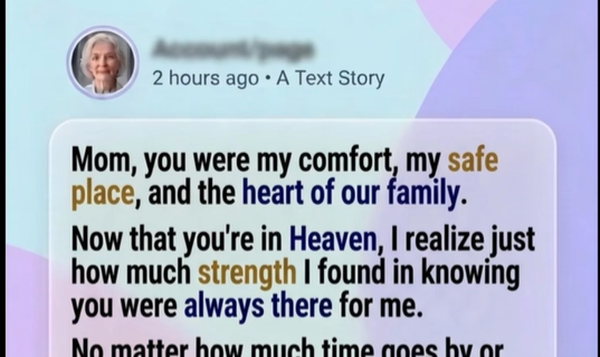
Forty-two days had passed since my mother died, but somehow, I still expected to hear her moving around the house.
I would walk into the kitchen and almost expect to find her standing by the counter, holding her morning coffee. Sometimes, I could practically hear her familiar voice reminding me to eat something or asking whether I had remembered to bring a jacket.
Her name was Evelyn, and she had been the heart of our family for as long as I could remember.
She passed away on a Tuesday. Since then, our family home in Alabama had felt strangely unfamiliar. The furniture was still in its usual places, her favorite dishes remained in the cupboards, and her old chair still sat beside the window.
Yet everything felt different.
I had returned to her house to spend a month settling her estate. My plan was simple: organize her belongings, pack the things we wanted to keep, and prepare the house for whatever came next.
I honestly believed staying busy would make the sadness easier.
But grief doesn’t follow a schedule. And no matter how many boxes I filled, I couldn’t seem to make the emptiness disappear.
On the morning of the forty-third day, I finally decided to clean the pantry.
It was the one room I had avoided because it still carried her scent. The shelves held jars of dried herbs, old tea tins, and the cookbooks she had collected throughout the years.
As I moved a pile of books, something small slipped from behind them and landed on the kitchen floor.
It was a little leather-bound notebook.
I recognized it immediately.
My mother’s prayer journal.
For years, I had watched her sit in her favorite armchair writing in that book. I had never asked what she wrote, believing those private moments were between her and God.
But that morning, something made me open it.
I sat on the cold kitchen floor and carefully turned the pages.
Her handwriting was beautiful, delicate, and unmistakably hers. Page after page contained prayers, reflections, and little messages about the people she loved.
She had written prayers for my brother, Elias, my sister, Clara, and me.
Then I found an entry dated just a few weeks before her death.
It wasn’t really a prayer. It was more like a message she had written to herself.
The words stopped me cold.
“I know my children are afraid that our family will fall apart when I am gone. But I hope they understand that I have spent their entire lives teaching them how to hold one another together. They are stronger than they realize. Everything they need is already inside them.”
I read those words several times.
Then the tears came.
I suddenly understood how much she had worried about us, even while facing her own difficult days. She had spent so much of her life making sure we were all right that she had quietly prepared us for a world without her.
That evening, Elias and Clara came over for dinner.
We had been trying to continue our family tradition, but lately, our gatherings had become uncomfortable. We talked about ordinary things, avoided difficult conversations, and pretended we were handling everything better than we really were.
Dinner that night was no different.
The only sounds were the occasional clink of silverware and the quiet movement of plates across the table.
Finally, I couldn’t keep the discovery to myself.
I stood up, walked into the kitchen, and returned with the journal.
I placed it in the middle of the table, right where Mom used to sit.
My brother looked confused. Clara reached toward the book but hesitated.
For a moment, none of us spoke.
Then I said quietly:
“Mom knew we were going to struggle without her.”
I opened the journal to the page I had found.
My brother leaned closer. My sister began reading, and within seconds, her eyes filled with tears.
We passed the notebook around the table, discovering little messages our mother had left behind.
Some were prayers. Others were reminders to be patient with one another. There were notes about how proud she was of us and how much joy she found in watching us build our own lives.
She had written about our strengths, our struggles, and the little things she admired about each of us.
Then Elias found a sentence that made him stop.
He read it aloud in a trembling voice:
“Your mother was your first home, but the love she gave you should become the home you build for one another.”
Nobody said anything for a while.
Then my brother whispered:
“She really was our safe place.”
And somehow, that simple sentence opened the door to everything we had been holding inside.
For the next three hours, we barely touched our dinner.
Instead, we talked.
We remembered how Mom used to hum when she was nervous. We laughed about the extra house key she insisted on hiding beneath the porch light, even though all three of us had our own keys.
We remembered her favorite expressions, her stubborn habits, and the way she could somehow tell when one of us was upset just by looking at our faces.
We cried, laughed, and told stories we hadn’t shared in years.
For the first time since her funeral, none of us felt the need to pretend we were okay.
We simply allowed ourselves to miss her.
And something changed that evening.
The sadness didn’t disappear, but it no longer felt like something each of us had to carry alone.
We were beginning to understand that grief could bring people closer when they stopped hiding it from one another.
The following morning, I woke before sunrise.
I took Mom’s prayer journal and walked out onto the back porch. The Alabama air was cool, and the yard was covered in morning dew.
I settled into her old wooden rocking chair and began turning the pages again.
Near the very end, I noticed a small piece of paper held in place by a paperclip.
It was a letter addressed to all three of us.
My hands trembled as I unfolded it.
It read:
“If you are reading this, the house is probably quiet again. But please don’t mistake the silence for the end of our family’s story.
Don’t let the empty rooms make you forget the people who are still sitting beside you.
Listen to each other. Forgive each other. Make time for one another.
I have spent my life loving you, but I hope you will spend yours loving one another.
You already know where to find comfort. It is in the hearts of the people who share your memories.
Be there for each other. Be each other’s safe harbor.
And whenever you miss me, remember that the love we shared was never meant to disappear.”
I couldn’t hold back the tears.
I looked toward the yard as the first sunlight appeared above the trees. The drops of water on the grass sparkled like tiny diamonds.
For the first time in six weeks, I felt something other than heartbreak.
I felt grateful.
My mother wasn’t coming back. I knew that. There would still be birthdays when we wished she could be there, holidays when her absence would feel unbearable, and ordinary afternoons when I would instinctively want to call her.
But I finally understood something important.
She hadn’t left us with nothing.
She had left us with each other.
She had spent years building a family that could stand together, even when the person who brought everyone together was no longer physically present.
I closed the journal and held it against my chest.
Then I went inside and started making coffee.
The kitchen was still quiet, but it didn’t feel quite as empty.
I knew we would have difficult days ahead. Healing wouldn’t happen overnight, and remembering her would sometimes hurt more than we expected.
But we had made a promise to each other.
We would keep gathering around the table. We would keep sharing stories. We would check on one another, laugh together, and never allow the silence to become a wall between us.
My mother had been the heart of our family.
But she had also taught us how to keep that heart beating.
And perhaps that is one of the greatest gifts a mother can leave behind.
Not a perfect house, not treasured possessions, and not even a lifetime of beautiful memories.
But a family that knows how to love one another when she is no longer there to remind them.
Because a mother’s love doesn’t end when her life does. Sometimes, it becomes the very thing that teaches the rest of the family how to keep going.